

Balinese interior design characteristics bring a unique spiritual and artistic soul into modern living spaces. Rooted in the rich culture of Bali, Indonesia, this design style blends natural materials, traditional craftsmanship, and a deep connection with nature. Whether you live in Howard County, India, or anywhere else in the world, adopting a Balinese interior style can completely transform your home into a peaceful, resort-like sanctuary.
From handcrafted wooden furniture to lush tropical greenery, every element of Balinese design tells a story of culture, harmony, and beauty. We explore everything you need to know about this timeless design philosophy.
What Are Balinese Interior Design Characteristics?
The Balinese interior design characteristics are deeply tied to Hindu-Balinese philosophy, which emphasizes balance between humans, nature, and the divine. This concept, known as Tri Hita Karana, is the spiritual backbone of every design decision. Homes are designed not just for comfort, but also for spiritual well-being and positive energy flow.
In a typical Balinese-inspired space, you will find open layouts that welcome natural light and fresh air. The use of organic textures, earthy tones, and handcrafted decor creates a warm and grounded atmosphere. Every corner of a Balinese room reflects craftsmanship and cultural pride.
✅ See Also: Desain Interior Bali
Key Elements of Balinese Interior Design
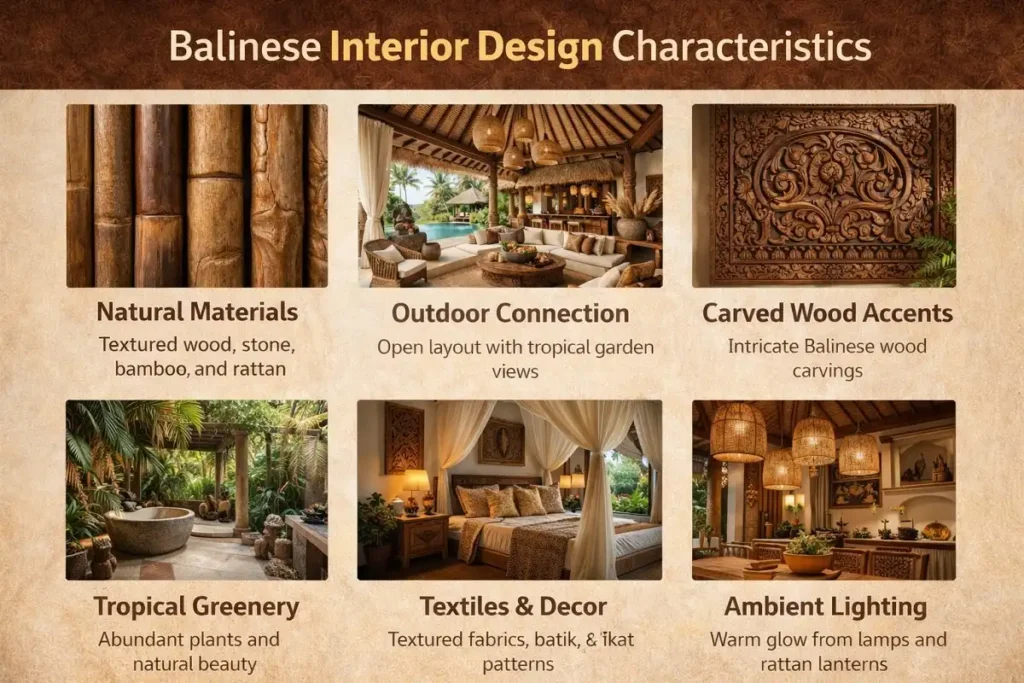
1. Natural Materials and Textures
One of the most defining Balinese interior design characteristics is the heavy use of natural materials. Teak wood, bamboo, rattan, stone, and terracotta are commonly used across floors, furniture, and wall accents. These materials are not just beautiful — they also make your home feel connected to the earth.
Woven rattan chairs, teak dining tables, and bamboo ceiling panels are classic Balinese interior choices. The rough, raw textures of stone and wood give each room a grounded, authentic character that no synthetic material can replicate.
2. Earthy and Warm Color Palette
The color palette used in Balinese interior design is inspired by the natural world of Bali — lush green rice fields, volcanic brown stone, warm golden sand, and deep ocean blue. Walls are often painted in shades of beige, terracotta, warm white, or soft brown.
These tones create a calm and serene atmosphere that immediately puts you at ease. Occasional pops of gold, deep red, or rich orange — inspired by traditional Balinese ceremonial decor — add warmth and depth to the space.
3. Open-Plan Living and Indoor-Outdoor Flow
Traditional Balinese architecture blurs the line between indoors and outdoors. Large sliding doors, open verandas, and courtyard spaces are core Balinese interior design characteristics. In modern interpretations, this translates to floor-to-ceiling windows, open-plan kitchens, and living rooms that extend into garden spaces.
This indoor-outdoor connection allows for natural ventilation, sunlight, and the presence of greenery right inside your home. It brings a resort-style feeling that is both relaxing and visually stunning, especially in luxury apartments and farmhouses.
4. Handcrafted Furniture and Artisan Decor
Balinese furniture is typically hand-carved and custom-made. You will find intricate floral or mythological carvings on wooden bed frames, cabinets, and decorative panels. Each piece is a work of art, reflecting the skills of local Balinese artisans passed down through generations.
Stone sculptures, brass candle holders, hand-woven textiles, and painted masks are popular Balinese decor items. These add a storytelling quality to your space, making each room feel like a curated gallery of culture and craft. This style works beautifully in living rooms, bedrooms, and even in Jess Apartment-style compact spaces.
✅ See Also: Interior Bali
Balinese Interior Design in Different Rooms
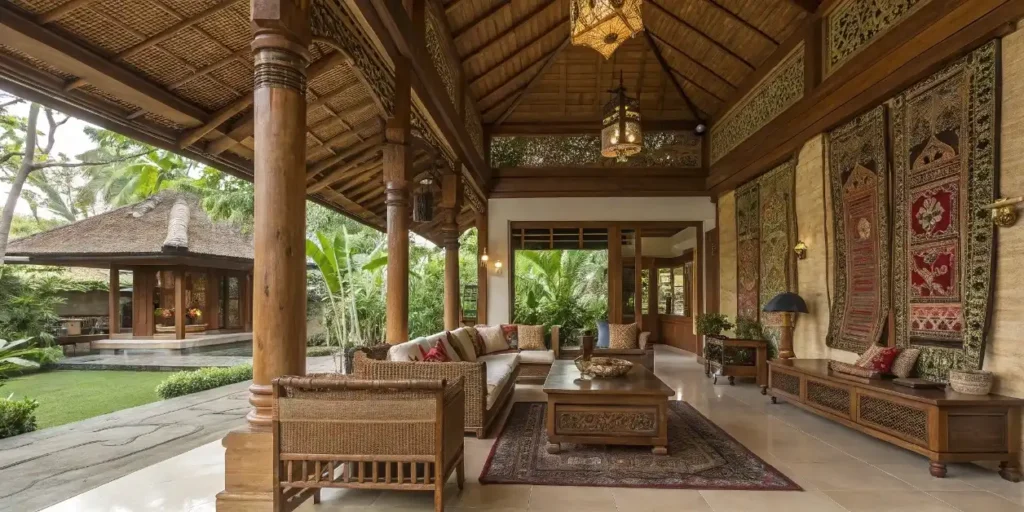
Living Room
A Balinese living room features low seating — floor cushions or teak daybeds — surrounded by lush plants and soft ambient lighting. A carved wooden coffee table and textured rugs complete the look. Keep the space clutter-free and let the natural elements breathe.
Kitchen
The Balinese kitchen often incorporates open shelving made from reclaimed wood, stone countertops, and clay or terracotta pots as decor. Woven baskets and bamboo organizers are both functional and beautiful. The kitchen feels organic and lived-in, not sterile or overly modern.
Bedroom
The Balinese bedroom is a sanctuary of calm. A four-poster teak bed with a flowing white canopy, soft linen bedding, and bedside lanterns create an atmosphere of pure relaxation. Fresh flowers, incense, and small spiritual offerings are optional but deeply Balinese touches that add meaning and serenity.
Quick Reference: Balinese Interior Design Elements
| Design Element | Key Feature | Best Used In |
| Natural Materials | Teak, bamboo, rattan, stone | Floors, furniture, ceilings |
| Color Palette | Earthy browns, warm whites, gold | Walls, textiles, accents |
| Furniture Style | Hand-carved, low-profile | Living room, bedroom |
| Lighting | Ambient, lanterns, soft warm glow | All rooms |
| Greenery & Plants | Tropical plants, lotus, ferns | Living room, bathroom |
| Decor | Stone sculptures, woven textiles | Every room |
How to Style Your Home with Balinese Interior Design
Styling your home with Balinese interior design characteristics does not require a full renovation. Start small — add a woven rattan light fixture, replace your sofa cushions with batik-print fabrics, or bring in a large tropical plant like a monstera or bird of paradise.
Layer natural textures throughout your space. A jute rug, a bamboo side table, and a carved wooden tray can instantly shift the vibe of a room. For those renovating a Spanish house or a River House exterior, extending these Balinese elements outdoors onto a deck or patio creates a stunning tropical retreat.
“The beauty of Balinese design is that it invites nature into every corner of your home — making you feel calm, grounded, and inspired every single day.”
✅ See Also: Modelling Bali
Balinese Interior Design Trends in 2026
In 2026, Balinese interior design characteristics are being blended with minimalism — a trend known as ‘Bali-Minimal.’ The idea is to keep the Balinese soul but strip away the clutter. Think clean lines, minimal furniture, and intentional decor with a strong focus on natural materials.
Vintage Balinese pieces — antique carved doors, old brass oil lamps, and traditional ikat textiles — are making a strong comeback in modern interiors. Designers and lifestyle influencers from India to Howard County are incorporating Balinese vintage elements into eclectic, layered living spaces with great success.
FAQs
Q1: What are the main Balinese interior design characteristics?
The main characteristics include the use of natural materials like teak, bamboo, and stone; an earthy and warm color palette; open indoor-outdoor layouts; handcrafted furniture; tropical plants; and spiritual or cultural decor elements like sculptures and woven textiles.
Q2: Is Balinese interior design expensive to achieve?
Not necessarily. You can start with small, affordable touches like rattan accessories, indoor plants, and batik cushion covers. Full renovations with custom teak furniture and stone features are more expensive, but a full overhaul is not required to get the Balinese look and feel.
Q3: Can Balinese design work in small apartments like Jess Apartment?
Absolutely! Balinese design works beautifully in compact spaces. Use vertical plants, mirrors to add depth, and low-profile furniture to keep the space open. Earthy tones and natural textures make even small rooms feel warm and resort-like without feeling cramped.
Q4: How does Balinese design differ from other tropical styles?
While many tropical styles focus on bright colors and bold prints, Balinese interior design is more grounded and spiritual. It emphasizes earthy tones, hand-carved craftsmanship, and a strong connection to Balinese Hindu culture, making it feel more serene and purposeful than other tropical aesthetics.
Q5: Can Balinese interior design be combined with other styles?
Yes, Balinese elements blend beautifully with Japandi, bohemian, farmhouse, and vintage styles. The key is to stick with natural materials and earthy tones as a base, then layer in Balinese decor pieces for cultural depth and warmth.
Conclusion
The Balinese interior design characteristics are more than just a design trend — they represent a philosophy of living in harmony with nature, culture, and spirit. From the earthy tones and natural textures to the open spaces and handcrafted decor, every element of this style is designed to bring peace and beauty into your everyday life.
Whether you are redesigning a living room, styling a kitchen, decorating a farmhouse, or creating a vintage-inspired bedroom, Balinese design principles offer timeless guidance. In 2026, as people seek more meaningful and mindful interiors, the Balinese design approach feels more relevant than ever.
So take the first step — bring in a piece of carved wood, add a tropical plant, or drape a batik cloth over your sofa. Let the soul of Bali transform your space into your personal paradise.


